

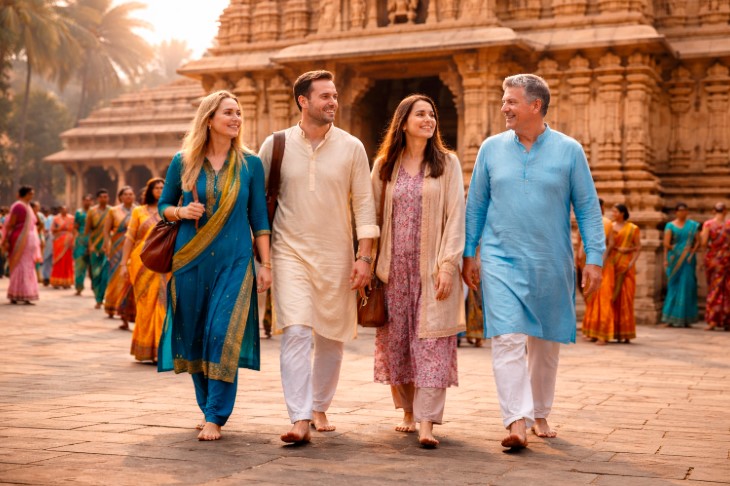
Clothing plays an important role when visiting Hindu temples in India. Unlike many tourist attractions, temples are sacred worship spaces where dress is considered part of devotional respect. For American travelers, temple attire expectations can feel unfamiliar. Many people search for how US citizens should dress when visiting Hindu temples in India, but often receive only brief or inconsistent advice.
This professional guide by LLL Trip Pilgrims explains proper, culturally respectful temple clothing standards so US Pilgrims and spiritual travelers can enter confidently and appropriately.
Why Dress Code Matters at Hindu Temples?
In Hindu tradition, modest dress reflects humility and purity before the deity. Temple authorities may deny entry if clothing is considered revealing or inappropriate. Understanding Hindu temple dress code for US visitors helps avoid embarrassment and last-minute problems at entry gates.
Dress expectations are not about fashion instead they are about reverence. Following proper clothing for Hindu temple visits in India shows cultural awareness and spiritual respect.
Core Rule: Modest and Covered Clothing
The most widely followed principle across temples is modest coverage. This is the foundation of modest dress rules at Indian temples for foreigners.
Both men and women should ensure:
• Shoulders are covered
• Knees are covered
• Midriff is not visible
• Clothing is not tight or transparent
• Undergarments are not visible
Loose, breathable clothing works best for comfort and compliance with temple dress etiquette in India for American pilgrims.
Recommended Temple Clothing for Men
Men have flexible but still modest options when following what men should wear in Hindu temples in India guidelines.
Best choices:
• Full-length trousers or loose cotton pants
• Kurta with pajama pants
• Collared shirts or simple t-shirts (with sleeves)
• Light shawl for certain ritual areas
Avoid:
• Sleeveless shirts
• Gym tank tops
• Short shorts
• Torn jeans
• Bare torso (unless specifically required in rare traditional temples)
In a few South Indian temples, men may be asked to remove shirts near the sanctum as this is tradition-specific and guided locally during guided pilgrimage tours in India for US travelers.
Recommended Temple Clothing for Women
Women are generally expected to dress more conservatively in temple spaces. Following what women should wear in Hindu temples in India ensures smooth entry.
Recommended options:
• Salwar kameez or churidar sets
• Long skirts with covered tops
• Kurta with full-length pants
• Saree (optional, not required)
• Maxi dresses with shawl coverage
Carry a shawl or dupatta as it is the most useful accessory for Hindu temple dress code for female visitors and can quickly solve coverage issues.
Avoid:
• Sleeveless tops
• Crop tops
• Short dresses
• Mini skirts
• Low-cut outfits
Why Traditional Indian Wear Is a Safe Choice
While not mandatory, traditional attire is always accepted and appreciated. Wearing local-style clothing simplifies compliance with acceptable dress for Hindu temples in India.
Benefits include:
• Guaranteed modest coverage
• Cultural blending
• Comfortable in warm weather
• Positive reception from locals
LLL Trip Pilgrims often suggests simple traditional outfits for US citizens visiting Indian pilgrimage temples because they reduce entry risk.
Footwear and Temple Entry
Dress etiquette includes what goes on your feet. All Hindu temples require barefoot entry under Hindu temple barefoot rules for visitors.
Plan for:
• Easy slip-on footwear
• Clean socks (if allowed — some temples prohibit)
• Shoe deposit counters
Avoid complicated laced shoes during multi temple pilgrimage tours in India.
Seasonal Dress Adjustments for Temple Visits
India’s climate varies widely. Temple clothing should still follow modesty rules while adapting to weather. Smart layering supports how to dress for Indian temple visits in different seasons.
Summer temple visits:
• Light cotton fabrics
• Loose fits
• Breathable layers
Winter or Himalayan temples:
• Thermal inner layers
• Shawls and sweaters
• Full coverage jackets
Even in heat, avoid revealing clothing as it violates temple modesty rules in India for foreign tourists.
Clothing Items That May Lead to Entry Denial
Temple staff may stop visitors wearing items that violate Hindu temple clothing restrictions for foreigners.
Commonly rejected attire:
• Shorts above knee
• Sleeveless tops
• Beachwear
• Ripped jeans
• Transparent fabrics
• Tight athletic wear
• Offensive slogan shirts
Carrying a wrap or shawl helps fix issues quickly during temple entry checks in India.
Head Covering: When and Where It Matters
Head covering is not mandatory in most Hindu temples but may be customary in certain regions or ritual moments. Understanding head covering rules in Indian temples for visitors helps you adapt respectfully.
Carry a scarf if:
• Visiting traditional South Indian temples
• Entering special ritual halls
• Participating in ceremonies
It is optional in most places but never wrong.
Jewelry, Accessories, and Presentation
Simple presentation aligns best with respectful temple appearance guidelines in India.
Recommended:
• Minimal jewelry
• Simple accessories
• Secure bags
Avoid flashy items or noisy accessories during sacred temple visits in India.
How LLL Trip Pilgrims Prepares US Travelers for Temple Dress Rules
Dress mistakes are one of the most common reasons for temple entry issues among foreign visitors. That’s why LLL Trip Pilgrims provides:
• Pre-departure dress checklists
• Region-specific temple dress alerts
• Packing guidance
• On-tour reminders
• Backup shawl support tips
Our India pilgrimage tours for US citizens include cultural briefings so travelers always meet Hindu temple dress code for US visitors standards.
Final Thoughts
Understanding how US citizens should dress when visiting Hindu temples in India is essential for respectful and stress-free spiritual travel. Modest, covered, and simple clothing is always the safest choice. When attire aligns with temple traditions, entry is smoother and the spiritual experience feels more authentic.
With preparation and cultural guidance from LLL Trip Pilgrims, American travelers can visit sacred temples across India with confidence, respect, and devotional readiness.