

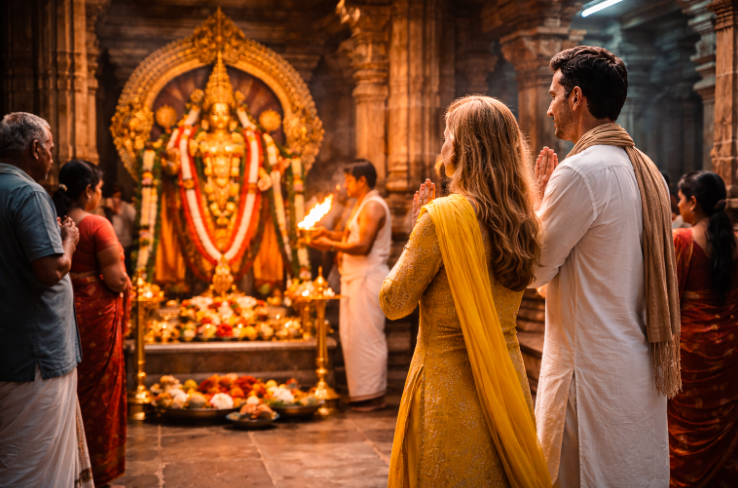
Why Temple Etiquette Matters in Indian Pilgrimage Travel?
Temples in India are not just tourist attractions instead they are living centers of worship with daily rituals, priestly traditions, and community rules. Respectful behavior preserves the sanctity of the space and ensures pilgrims are allowed smooth entry and participation in rituals.
Following proper Indian temple visit guidelines for pilgrims also helps avoid unintentional offense and entry restrictions at traditional shrines.
Dress Modestly According to Temple Traditions
Clothing is one of the most important aspects of temple etiquette in India. Many temples enforce modest dress codes at entry gates.
Recommended dress practices:
• Wear clothes that cover shoulders and knees
• Avoid sleeveless tops, shorts, and tight outfits
• Prefer traditional or simple loose clothing
• Carry a shawl or scarf for head/shoulder covering when needed
Some major temples provide wrap cloths at the entrance, but not all. For pilgrimage circuits, LLL Trip Pilgrims advises travelers in advance about temple dress code rules in India for visitors to avoid last-minute issues.
Remove Footwear Before Entering Temple Premises
Removing footwear is mandatory in almost all Hindu, Jain, and many Buddhist temples in India. It is considered a sign of humility and purity.
Best practices:
• Use designated shoe counters or racks
• Keep a small cloth bag for your footwear if counters are crowded
• Wear easy-to-remove sandals or slip-ons during temple tours
• Wash feet if washing areas are provided
In large pilgrimage routes, organized tours by LLL Trip Pilgrims include planned stop time for temple entry preparation rituals in India.
Follow Photography and Mobile Phone Rules
Not all temples allow photography. Some prohibit cameras and mobile phones entirely inside the inner sanctum and prayer halls.
Guidelines to follow:
• Check signboards before taking photos
• Ask temple staff or guides if unsure
• Deposit phones where required
• Never photograph priests or rituals without permission
Respecting these rules is part of responsible temple tourism in India, and violations can lead to fines or device confiscation.
Observe Silence and Ritual Discipline
Temples are active worship spaces where devotees pray, chant, and perform rituals. Maintaining silence and discipline is essential.
Respectful conduct includes:
• Speak softly or remain silent
• Do not interrupt ongoing rituals
• Stand patiently in darshan queues
• Follow priest instructions without argument
• Avoid loud group conversations inside prayer areas
Pilgrimage groups managed by LLL Trip Pilgrims receive briefing on proper behavior inside Indian temples before each major shrine visit.
Respect Queue Systems and Darshan Procedures
Most popular temples operate on structured darshan (viewing) systems with barricaded queues. Attempting to bypass lines is considered disrespectful.
Important etiquette:
• Join the correct queue (general or special darshan)
• Do not push or rush near the sanctum
• Keep offerings ready before your turn
• Move forward promptly after darshan
Some temples have separate lines for seniors and differently-abled pilgrims. LLL Trip Pilgrims helps arrange assisted darshan access for senior pilgrims in India where permitted.
Offerings Should Follow Local Practice
Different temples accept different types of offerings. Random items from outside may not always be allowed.
Common acceptable offerings:
• Flowers and garlands
• Fruits and sweets
• Coconut and incense
• Temple-approved prasad items
Avoid plastic packaging and non-traditional items. Buying offerings from authorized stalls near the temple supports local systems and ensures compliance with temple offering guidelines in India.
Understand Gender and Area Restrictions
Certain temples or inner sanctum areas may have traditional access rules based on custom. While policies evolve, some restrictions still apply in specific shrines.
Examples include:
• Restricted inner sanctum entry
• Priest-only ritual zones
• Separate prayer sections
• Tradition-based access timing rules
Visitors should respect these practices even if they differ from their home country norms. LLL Trip Pilgrims prepares travelers with region-wise temple entry customs in India before arrival.
Participate Respectfully in Prasad and Rituals
Prasad (blessed food) and ritual blessings are important parts of temple visits.
Do’s:
• Receive prasad with right hand or both hands
• Do not waste blessed food
• Sit or step aside before consuming
• Follow local method of receiving tilak or holy water
If unsure, observe other devotees or ask your guide. Guided groups through LLL Trip Pilgrims receive temple ritual participation guidance for foreign pilgrims.
Avoid Public Displays and Casual Behavior
Temple premises are sacred zones, not social hangout spaces.
Avoid:
• Public displays of affection
• Casual posing in front of deities
• Eating non-veg food near temple areas
• Smoking or chewing tobacco
• Sitting with feet pointed toward shrines
Maintaining devotional decorum is central to spiritual travel etiquette in India.
Final Thoughts
Respecting temple customs in India is not complicated instead it simply requires awareness, humility, and observation. When pilgrims follow dress codes, ritual discipline, silence norms, and offering traditions, their spiritual experience becomes deeper and more welcomed by local communities.
LLL Trip Pilgrims provides guided pilgrimage tours across India with pre-visit briefings, temple etiquette support, and culture-aware tour coordination by ensuring that every devotee travels with both devotion and respect.